
Playbattlesquare became a global sensation was skins — it reads like a sentence assembled by a search engine, but thousands of players type some version of this phrase every month. They are asking a real question underneath the garbled grammar: did character skins really drive PlayBattleSquare’s popularity? What are these skins, how do you get them, and why does the community care about them so much?
This guide unpacks the whole phenomenon: what PlayBattleSquare skins are, how they stood out, why they became social currency, and what the skins craze says about gaming culture in general. No hype, no invented numbers — just the story behind the search phrase.

Table of Contents
Decoding the Search Phrase
First, let us address the elephant: “playbattlesquare became a global sensation was skins” is not a sentence anyone would say out loud. It is the kind of phrase that emerges when thousands of people search related ideas — PlayBattleSquare’s popularity, its skins, its customization — and the keyword data mashes them together.
But garbled or not, the intent is clear. Searchers have connected two ideas: PlayBattleSquare got big, and skins were the reason. That connection is worth examining, because it mirrors how cosmetic customization has driven engagement across the entire gaming industry — from Minecraft’s skin community to the billion-dollar cosmetic economies of modern multiplayer games.
So was it the skins? The honest answer: skins were not the only thing, but across fan coverage and community discussion, character customization consistently shows up as the feature players talk about most. Here is why.
What PlayBattleSquare Skins Actually Are
In the PlayBattleSquare universe, skins are unlockable visual customizations for your character — your “square hero,” as community coverage calls it. They change how you look in-game without changing how you play: new outfits, new color schemes, new visual flair that makes your character yours.
Players access skins through several paths, according to fan-site breakdowns of the platform:
- Achievements: Hit gameplay milestones and unlock exclusive looks that prove you earned them.
- Special events: Limited-time events offer skins you can only get while the event runs.
- The in-game store: A rotating selection of purchasable cosmetics.
- Seasonal content: Holiday and season-themed skins tied to real-world calendars.
The key design choice: skins are purely cosmetic. They do not make you stronger or faster. That matters, because it means every skin in the game is a statement of identity rather than a competitive advantage — and identity is exactly what gaming communities run on.
How PlayBattleSquare’s Skins Stood Out From the Crowd
Plenty of games have skins. What made this collection the thing players associate with the platform’s rise? Fan coverage points to a few differentiators:
Creativity over generic: Rather than simple color swaps, the skins drew on cultural trends, recognizable character archetypes, and community feedback. Players saw their own suggestions reflected in new releases, which created a feedback loop: the community asked, the game delivered, the community got louder.
Seasonal storytelling: Skins tied to events and seasons gave players reasons to come back. A Halloween skin is not just a costume — it is a timestamp, proof you were there. That time-limited structure turns cosmetics into memories.
Exclusivity without pay-to-win: Because skins are cosmetic-only, rare skins signal dedication rather than wallet size. An achievement-unlocked skin says “I did the hard thing,” which earns a different kind of respect than a store purchase.
This is the pattern behind the “global sensation” half of the search phrase: not one viral moment, but a steady accumulation of community moments, each wearing a new skin.
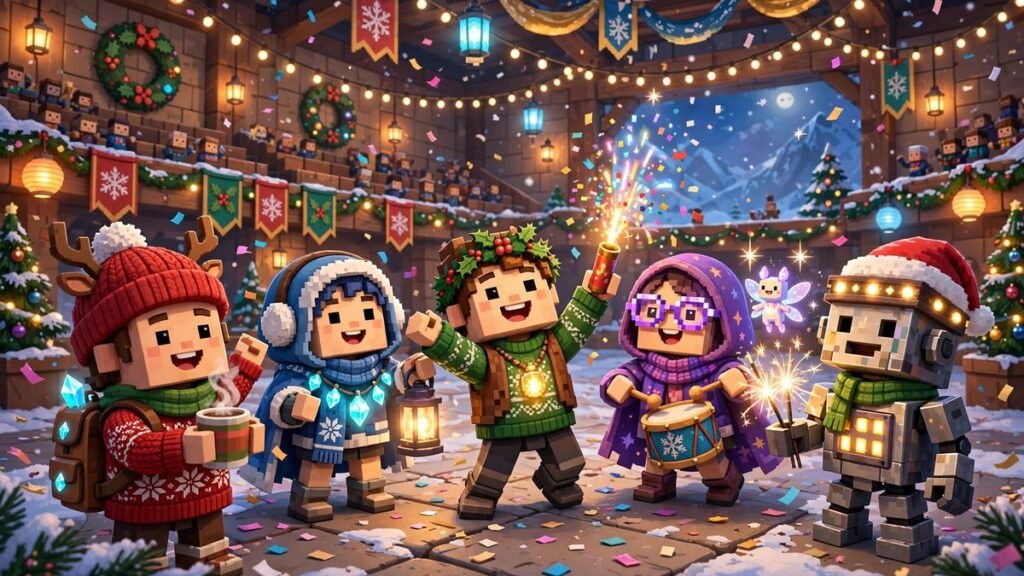
Skins as Social Currency
The most fascinating part of the phenomenon is economic — not real money, but social currency. In the PlayBattleSquare community, skins function the way rare sneakers function in streetwear culture:
- Rarity equals status. A skin from a one-time event or a brutal achievement instantly communicates your history in the game.
- Showing off is the point. Multiplayer arenas are runways. Players flaunt rare skins the way they would a trophy — because that is what they are.
- Trading and bragging rights create interaction. Skins give strangers something to talk about, compare, and compete over beyond the match itself.
- Identity formation. Your main skin becomes you in the community. Other players recognize you by it before they read your name.
This social layer is what transforms cosmetics from a nice extra into a retention engine. Players do not just log in to play — they log in to be seen. And every new skin release is a new reason to be seen somewhere.
The Community Effect: Why It Compounded
Skins did not just decorate the community; they organized it. Here is how the compounding worked:
Events became gatherings. Skin-unlock events functioned as community festivals — everyone grinding the same challenge, showing off the same new looks, sharing strategies. The skin was the excuse; the togetherness was the product.
Content creators amplified everything. Skin showcases, “rarest skins” countdowns, and event guides are evergreen content. Every creator covering a new skin drop advertised the game for free.
Feedback loops tightened. When players saw their suggestions become real skins, engagement deepened. Few things bond a community like being heard — and few things are more visible proof of being heard than wearing the result.
So when someone searches “playbattlesquare became a global sensation was skins,” they are really describing this flywheel: skins gave the community something to gather around, the gathering created content, the content attracted players, and the players wanted skins. Round and round.
Why Skins Drive Hype Across All of Gaming
PlayBattleSquare is not an outlier — it is a case study in an industry-wide truth. Consider the parallels:
- Minecraft: An entire subculture of skin creation, with millions of free community-made skins and a marketplace for premium ones. Your skin is your identity on every server you join. (The official Minecraft site supports this ecosystem with skin customization built into the game.)
- Fortnite: Turned cosmetic skins into a cultural phenomenon, with collaborations spanning movies, music, and sports.
- Counter-Strike: Weapon skins became a genuine economy, with rare items trading for staggering sums.
The psychology is consistent: humans signal identity through appearance, and games are just another place we appear. A skin is a username you can see. When a game’s skins are creative, earnable, and socially visible, they stop being cosmetics and start being culture.
That is the deeper answer to the search phrase. It was not magic — it was the oldest social mechanic in the book, executed well.
How to Pick a Skin That Stands Out
Whether you are in PlayBattleSquare, Minecraft, or any game with cosmetics, the same principles pick winners:
- Rarity over flash: The rarest skin in the lobby beats the brightest one. Event and achievement skins age better than store-bought.
- Readability: The best skins are recognizable at a glance, even in chaotic fights. Bold silhouettes beat fine details.
- Theme it: Match your skin to your playstyle or your crew. Coordinated team looks intimidate lobbies.
- Rotate seasonally: Wearing the current event’s skin signals you are active and engaged — social currency in motion.
- Make it yours: The skin you are known for matters more than the skin that is objectively coolest. Consistency builds identity.
And if you want inspiration from the funniest corner of skin culture, a good roundup of funny Minecraft skins proves that the best skin is sometimes just the one that makes the whole lobby laugh.
PlayBattleSquare Skins FAQ
Are PlayBattleSquare skins free?
Many are earned free through achievements and events, while the in-game store offers additional options. The rarest skins tend to be the earned ones, not the bought ones.
Do skins affect gameplay?
No. Skins are purely cosmetic — they change your appearance without affecting stats, abilities, or competitive balance.
What does “playbattlesquare became a global sensation was skins” mean?
It is a garbled search phrase combining two ideas: PlayBattleSquare’s popularity and the community’s love of its character skins. Searchers are asking whether skins drove the game’s success — and the community discussion suggests they were a major factor.
How do I get rare skins?
Focus on limited-time events and difficult achievements rather than the store. Event-exclusive and achievement-locked skins carry the most social value because they prove participation, not just purchase.
Conclusion
Playbattlesquare became a global sensation was skins may be broken English, but it captures a real story: a game’s cosmetic customization became its cultural engine. Creative designs, seasonal events, achievement exclusives, and a community that turned skins into social currency compounded into the kind of organic hype marketing cannot buy.
Was it only the skins? No — games do not take off on cosmetics alone. But skins were the visible face of everything the community loved: creativity, recognition, and belonging. In gaming, how you look is how you belong — and few things prove it like a lobby full of players showing off who they are. For more on the art of standing out, check our funny Minecraft skins ideas and find the look that makes you unforgettable.